 Delaware Spending
Delaware Paid $4.8 Million to a Company Called Random Rubber Chicken
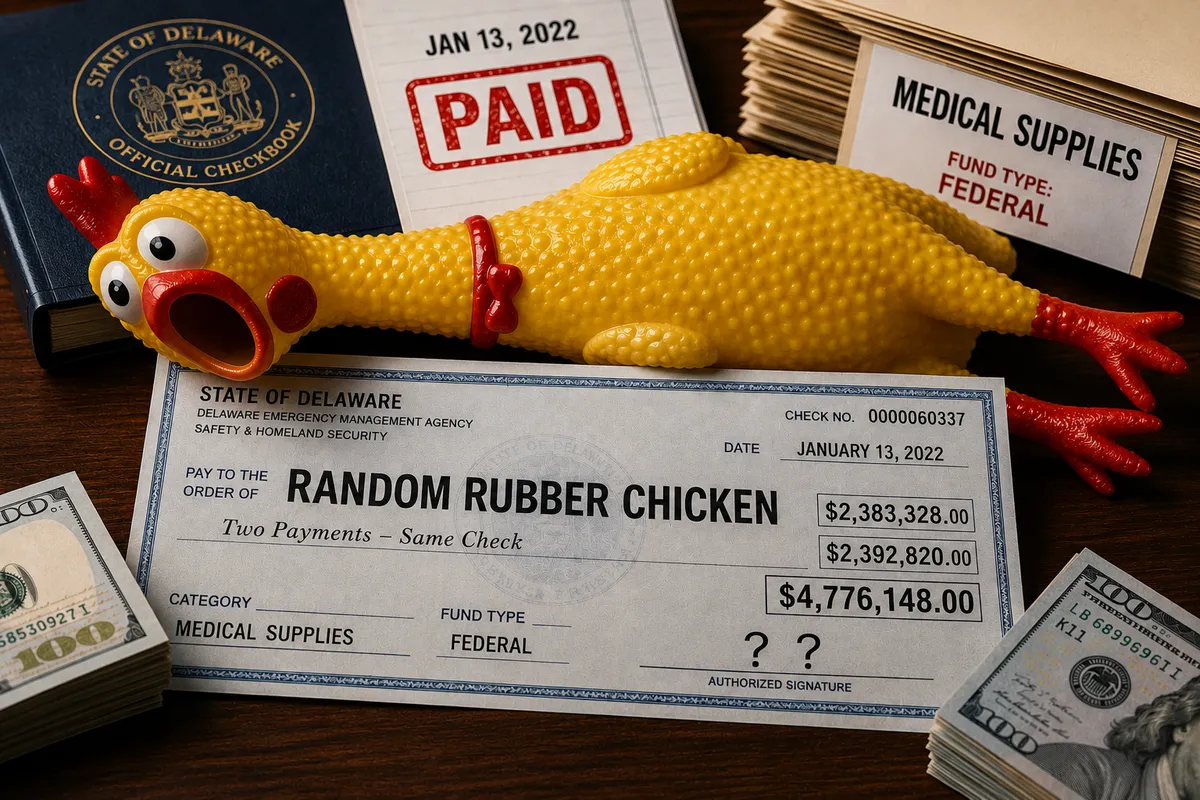
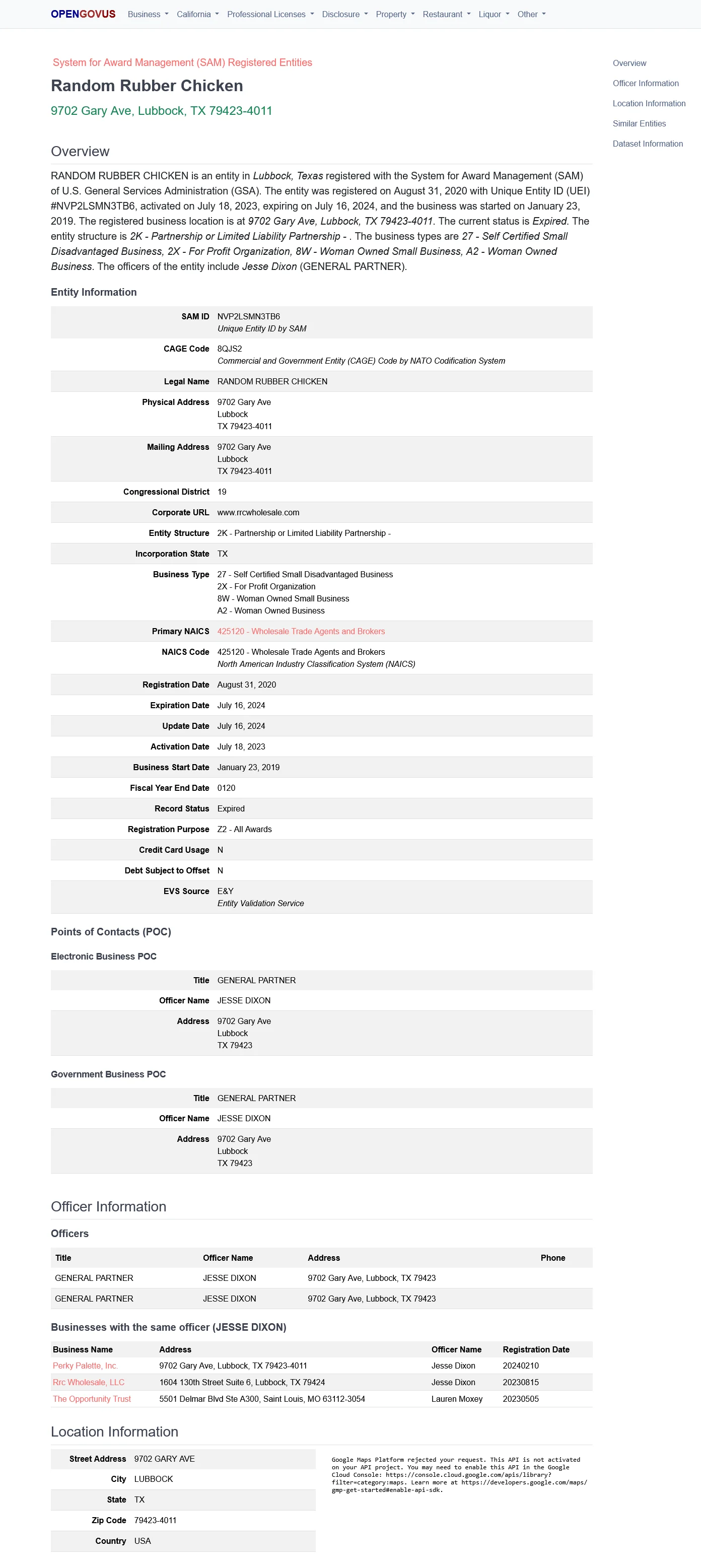
Let's walk through this together, slowly. It is January 13, 2022. Omicron — the hyper-contagious COVID variant that tore through the country that winter — is setting case records in Delaware. There is not an at-home COVID test to be found in a pharmacy anywhere on the Eastern Seaboard. And on this day, the State of Delaware wires $4,776,148 in federal emergency money — filed under the deeply serious category of Medical Supplies — to a company whose legal, registered, federal-contractor name is RANDOM RUBBER CHICKEN. This is real. We checked. Then we checked twice more, because come on.
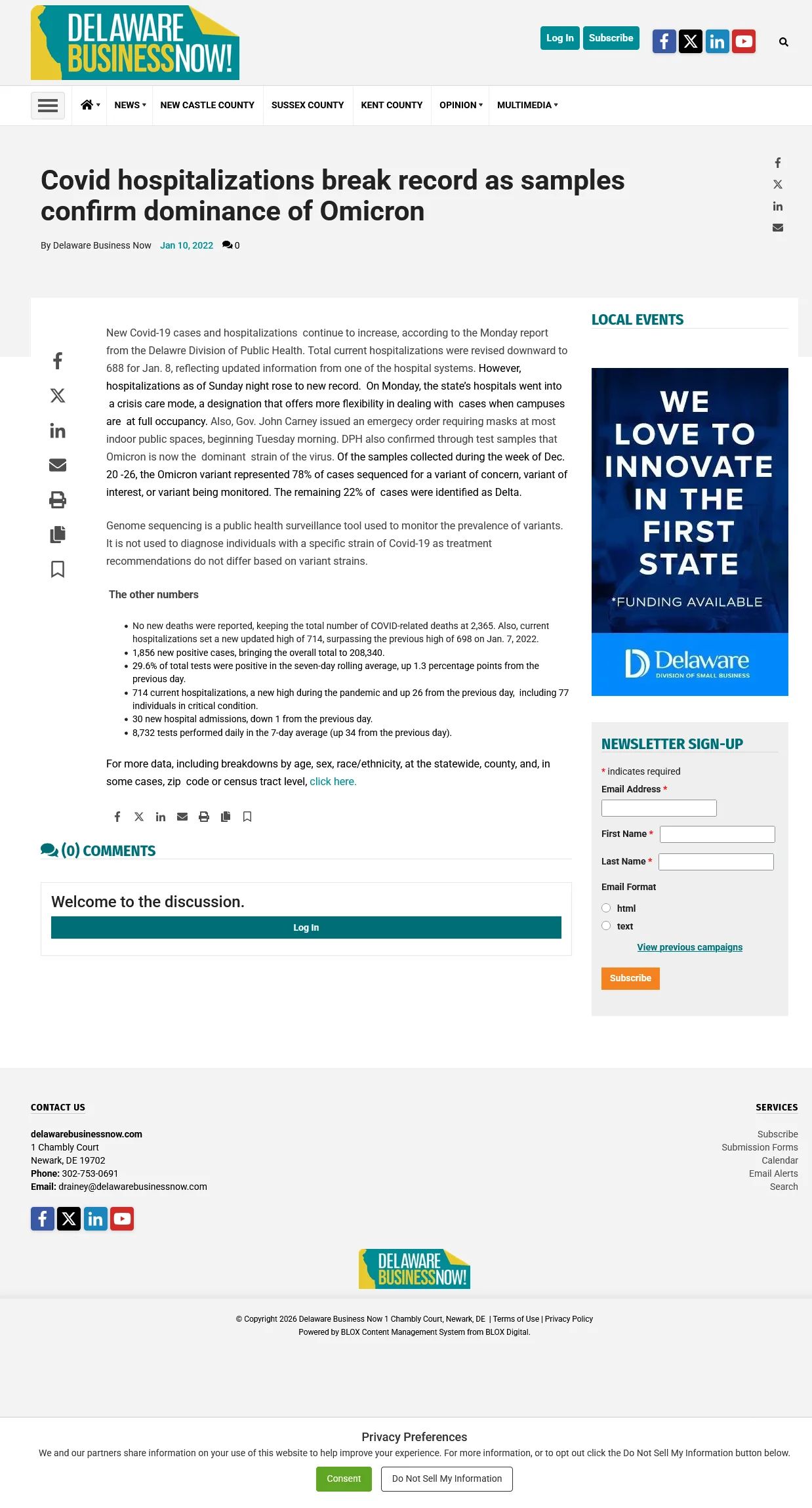
- Two payments on one check (#0000060337), dated January 13, 2022: $2,383,328 and $2,392,820 — that link is the state's live API; see for yourself
- Paid by DEMA — the Delaware Emergency Management Agency, under Safety & Homeland Security
- Category: Medical Supplies · Fund type: Federal
- Random Rubber Chicken is a real wholesaler in Lubbock, Texas — founded March 9, 2020
- It held a federal SAM contractor registration as a woman-owned small business, now expired
The ledger doesn't blink
Here is how Delaware's official transparency portal records one of its emergency agency's largest single-day payments of the entire pandemic — with the emotional range of a parking receipt:
| Date | Division | Vendor | Category | Fund | Amount |
|---|---|---|---|---|---|
| Jan 13, 2022 | DEMA | RANDOM RUBBER CHICKEN | Medical Supplies | Federal | $2,383,328 |
| Jan 13, 2022 | DEMA | RANDOM RUBBER CHICKEN | Medical Supplies | Federal | $2,392,820 |
Source: State of Delaware Checkbook, data.delaware.gov — check #0000060337, FY2022, fiscal period 7. No note. No explanation. Just a rubber chicken sitting in the middle of a pandemic ledger.
Somewhere in Delaware, a government employee typed RANDOM RUBBER CHICKEN into the state's payment system. A second person reviewed it. The system printed it on a check for four million, seven hundred seventy-six thousand dollars. At no point in this chain did anyone leave so much as a comment for the public record. We simply have to respect the professionalism.
Yes, it's a real company
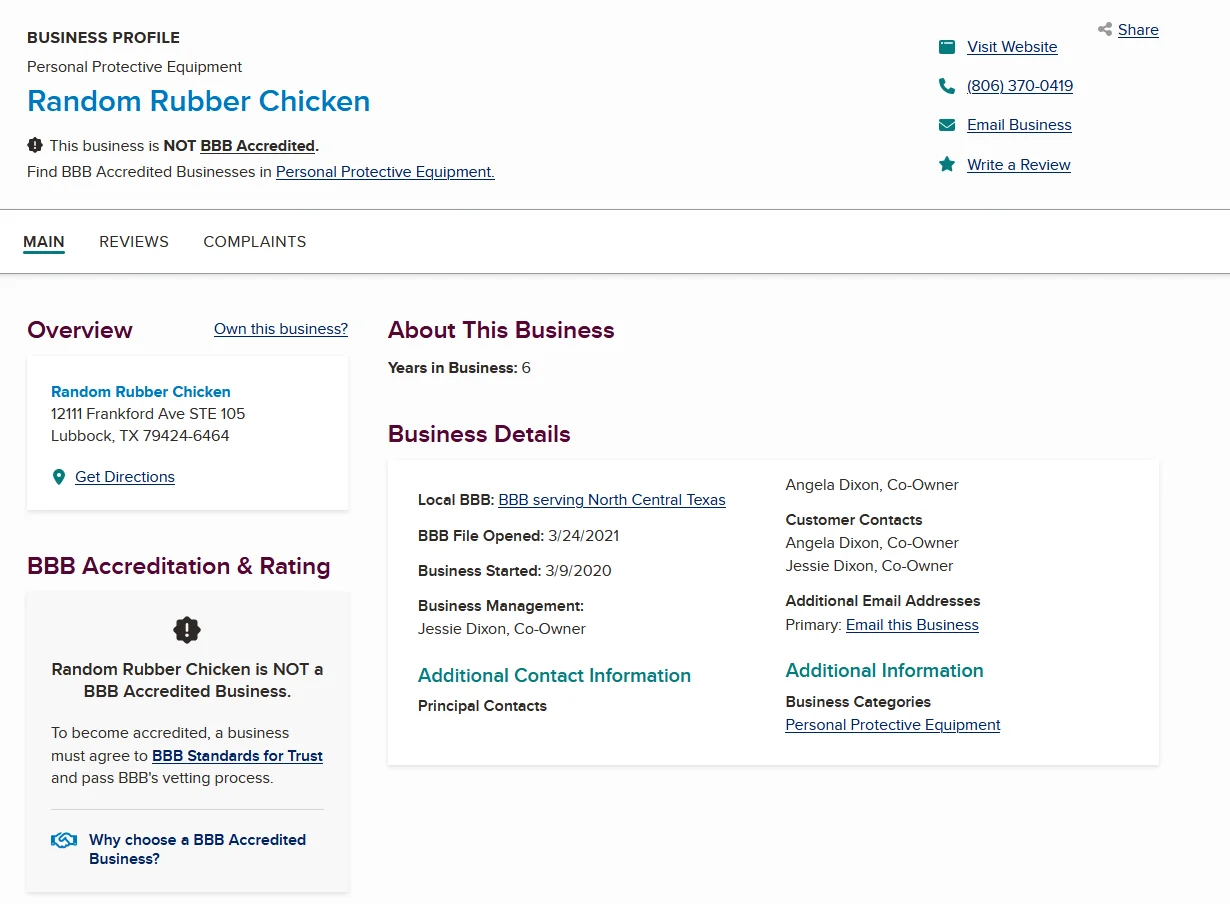
Random Rubber Chicken is a registered business at a strip-mall suite in Lubbock, Texas, with a Better Business Bureau profile — category: Personal Protective Equipment, rating: A+, two listed co-owners. Its federal contractor registration described a woman-owned liquidation wholesaler; a chamber-of-commerce listing has it dealing in "baby items, PPE, COVID-19 testing kits, liquidation truckloads, grocery items, home decor, tools, and office supplies" — which is either a supply chain or a yard sale, depending on the week.
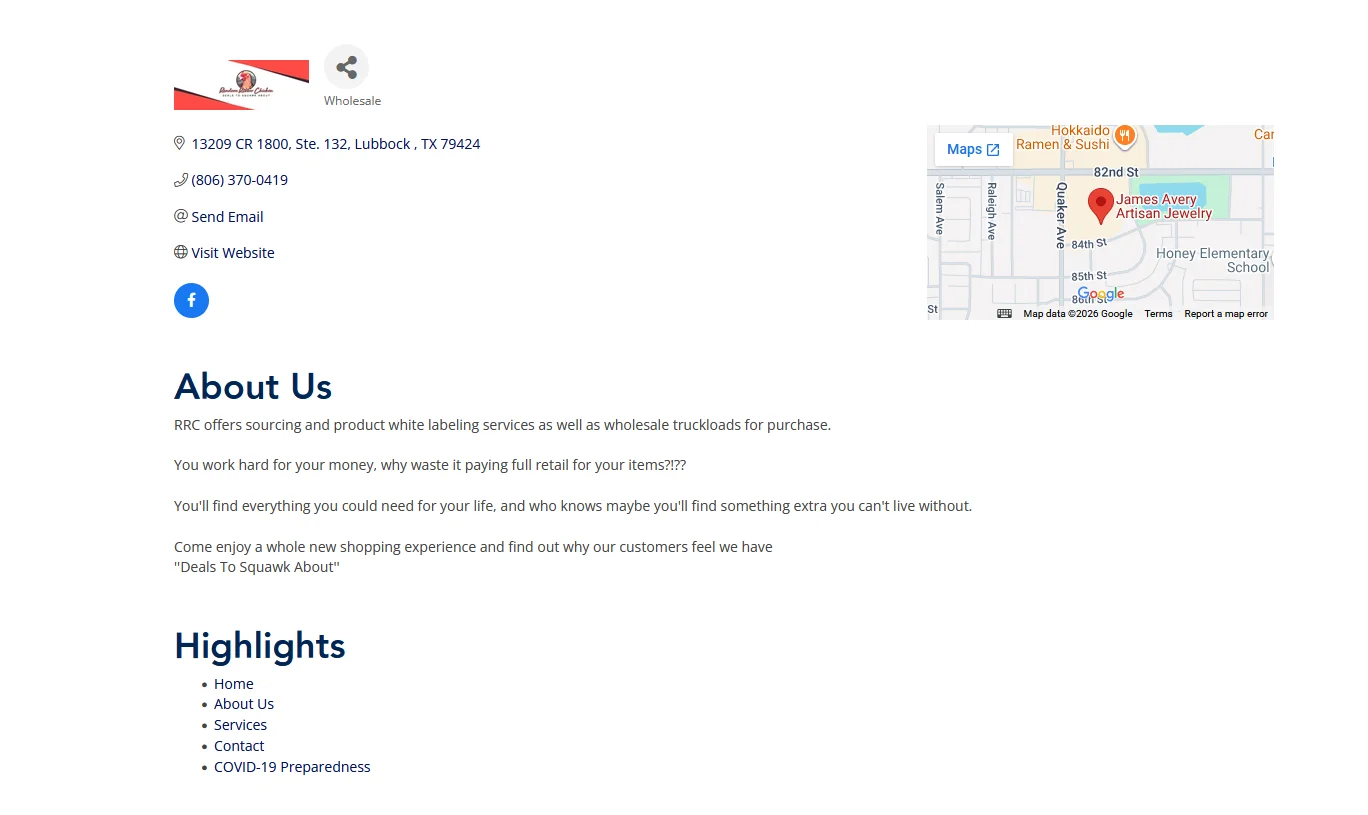
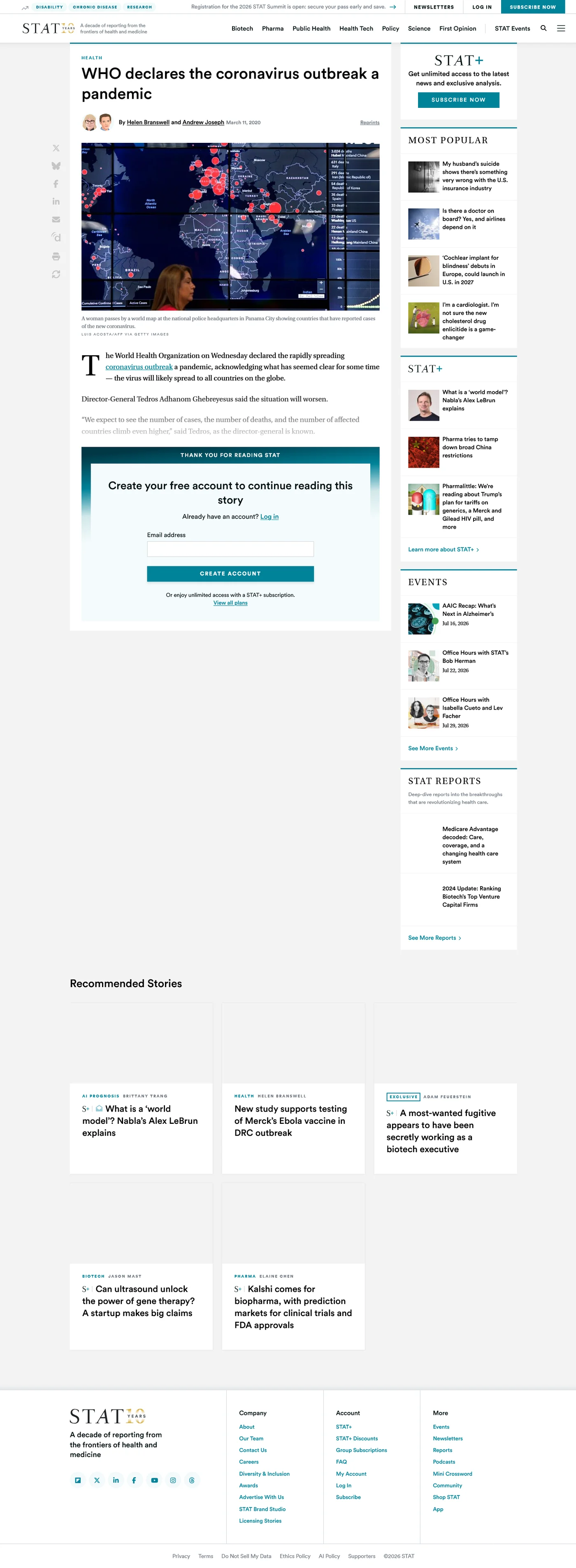
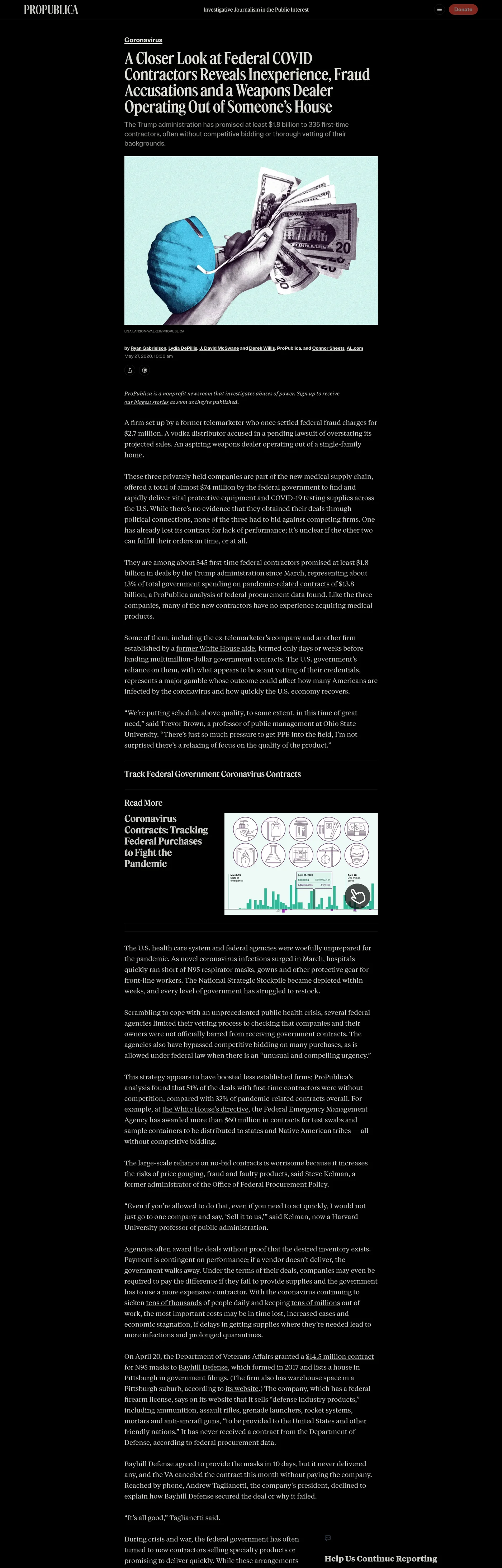
And the start date listed on its own BBB profile is the chef's kiss: March 9, 2020. The WHO declared a global pandemic on March 11. By its own account, Random Rubber Chicken beat the pandemic to market by two days. Genuinely — hats off. Overnight brokers stampeded into the wartime PPE market in 2020 — ProPublica counted hundreds of first-time contractors landing $1.8 billion in federal deals, some formed just days before their awards. This one happened to name itself like a dog toy and then land a seven-figure state payment.
No — not actual rubber chickens
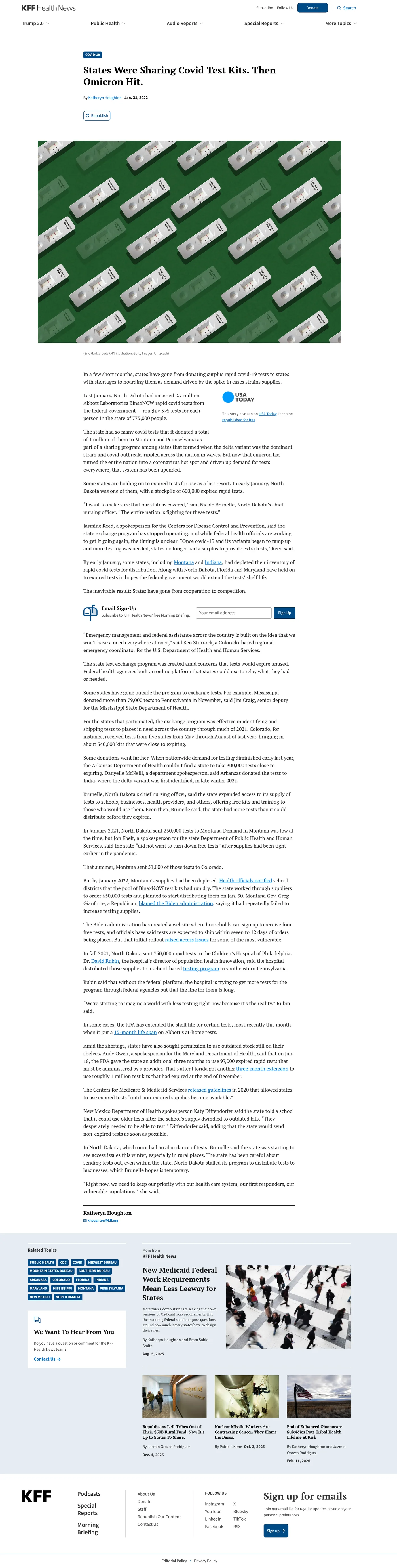
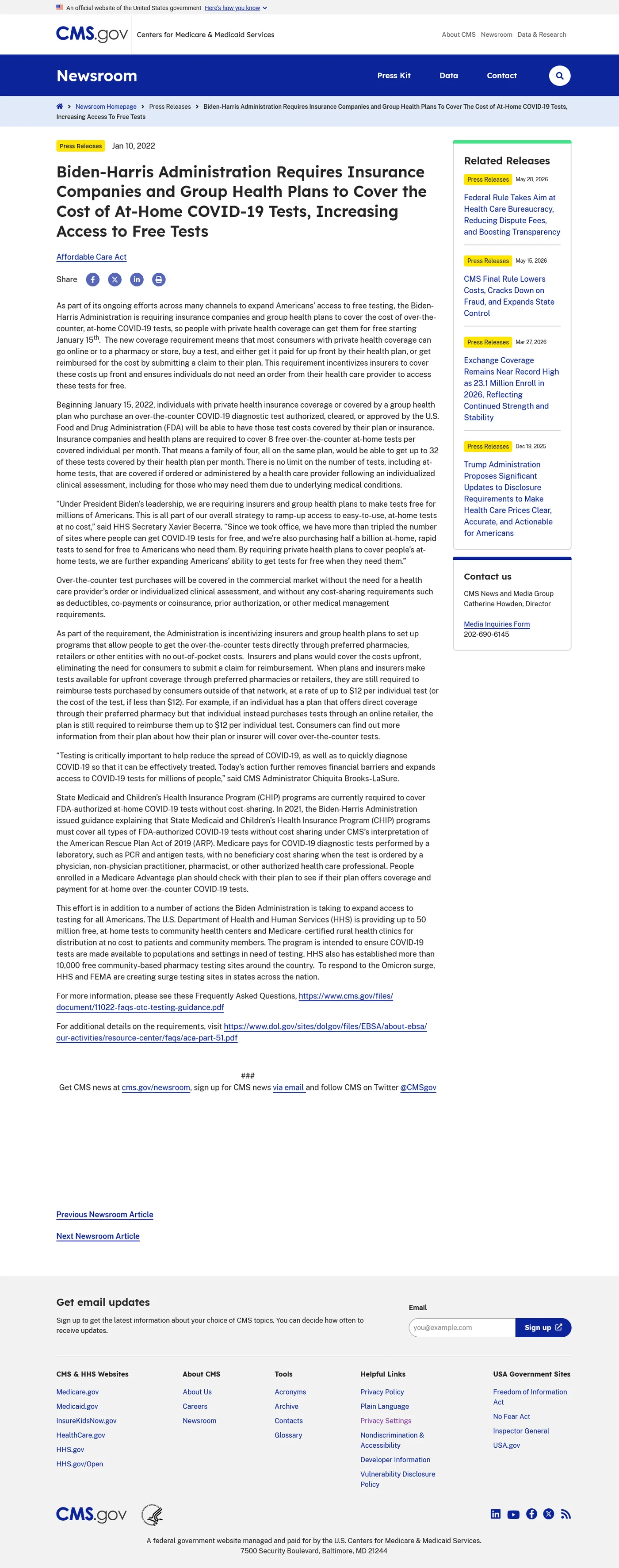
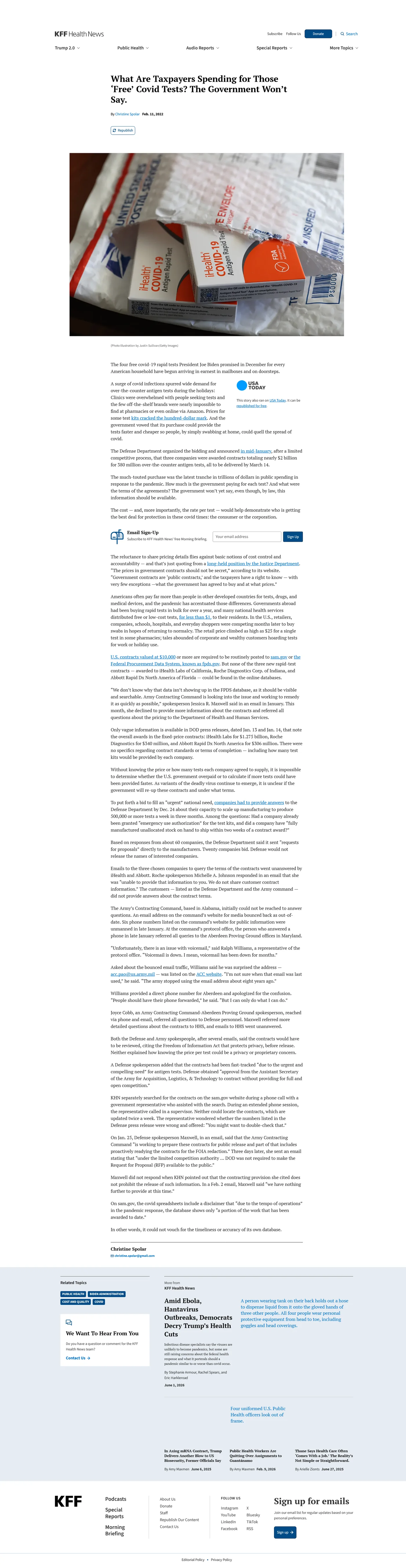
Before anyone asks: the state did not buy $4.8 million of novelty poultry. The checkbook has categories for that sort of thing ("Promotional Supplies," "Recreational Equipment") and this purchase used neither — it's coded Medical Supplies, on federal emergency funds, which come with FEMA-grade paperwork. "Random Rubber Chicken" is just the name. For scale: that same week the feds set a $12-a-test reimbursement benchmark, KFF found retail prices as high as $25, and bulk state buys ran well under $10. At broker prices in that range, $4.8 million is on the order of half a million to a million at-home test kits — about right for a state of one million people handing kits out at libraries. If it was masks, call it five million N95s.
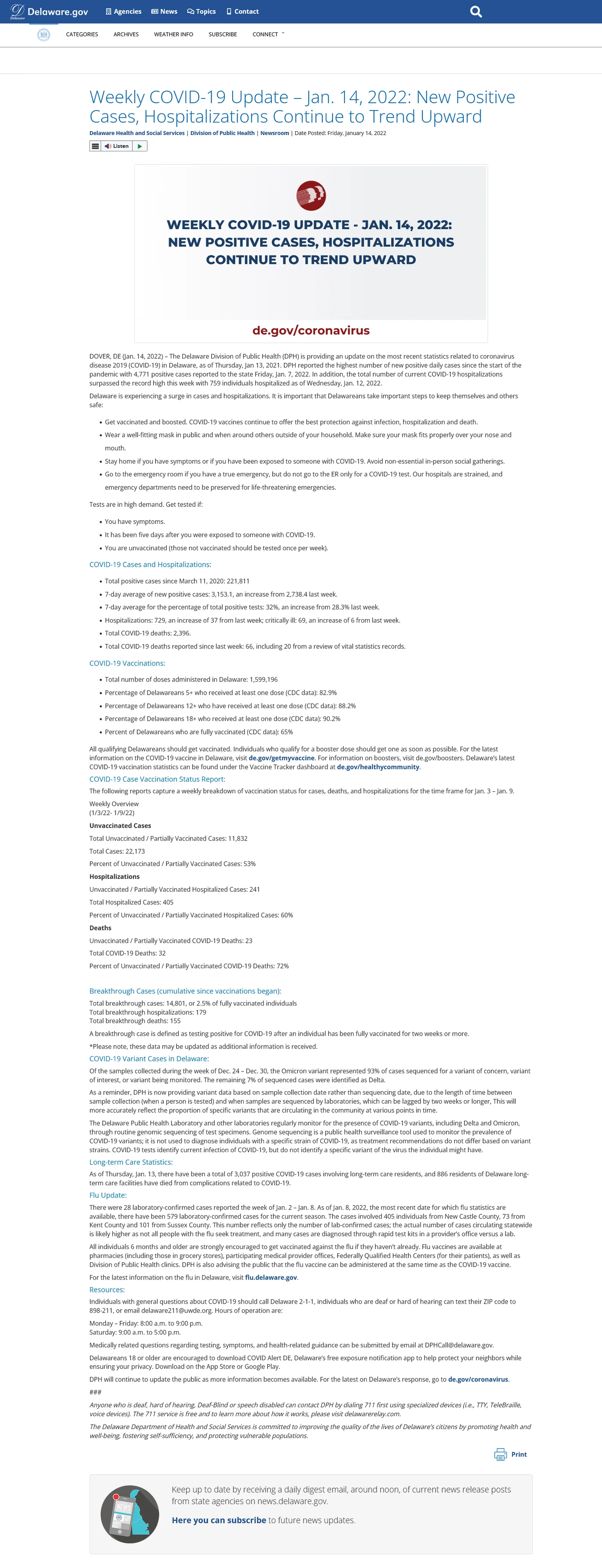
And in fairness to the buyers, look at the week on the calendar. This was the very peak of the Omicron wave. The day before this check, Delaware set its all-time COVID hospitalization record — 759 people, per the state's own weekly update. The Friday before that, the state logged 4,771 new cases in a single day, the most of the entire pandemic. If there was ever a week a state would wire five million dollars to anyone who could actually deliver test kits, it was precisely this one. That's the context, and it's real. It is also, of course, exactly the kind of week when nobody reads the vendor name twice.
For the record, Delaware's checkbook contains several other chicken-adjacent vendors — Chicken Little Farms, Coastal Chicken, Blaine's Chicken Inn — and every one of them sells actual chicken. Only one chicken on the ledger sells medical supplies.
We're not saying anything went wrong. We're saying: look at it.
Everything here may be perfectly fine. Emergency procurement rules exist so agencies can move fast when pharmacy shelves are bare, buying from brand-new brokers was standard nationwide practice in 2020–2022, the company has a clean record, and the state may well have gotten exactly what it paid for at a fair crisis price. That is genuinely the most likely story.
But the entire point of publishing a checkbook citizens can read is that citizens get to look at a line item and say, out loud, "I'm sorry — what?" Consider it said. The fair questions, four years on: What was delivered? At what unit price, compared with what states paid manufacturers directly? How was a Lubbock liquidation outfit selected to receive one of DEMA's biggest single-day payments of the pandemic? And is there really no field in the state's accounting system for "you're going to want to write a sentence of context on this one"? The transparency portal got us this far. The rest is one very entertaining FOIA request away.
Epilogue: the chicken today
We visited the company's current website. There is no mention of test kits, masks, PPE, or medical supplies of any kind — the $4.8 million chapter appears nowhere in the story the company now tells about itself. What does a pandemic liquidation wholesaler become when the pandemic ends? Glad you asked:
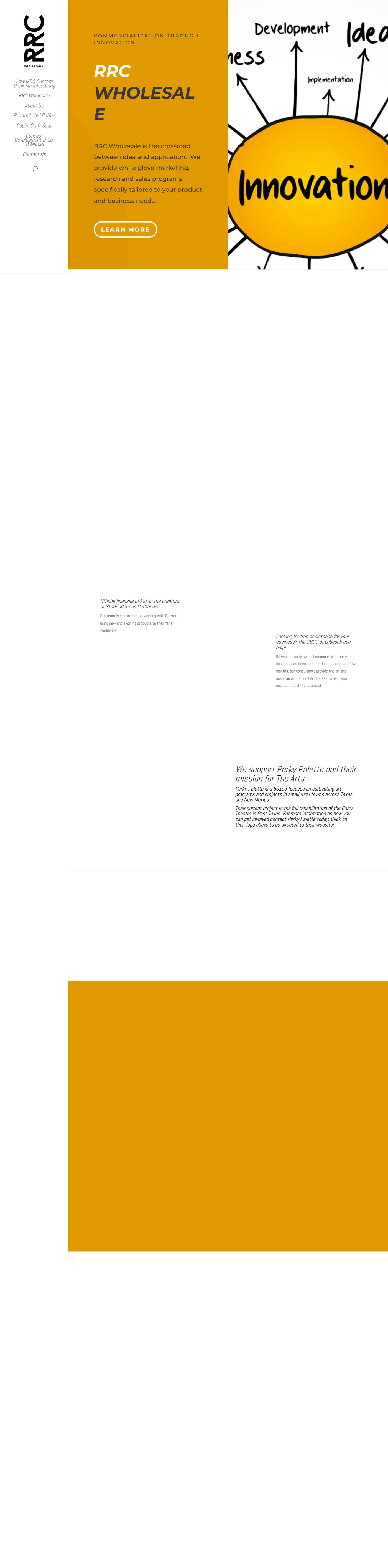
- “Low MOQ Custom Drink Manufacturing” — work directly with their flavor chemist to “push boundaries, break rules, and have some fun”
- Private-label coffee — “Go ahead get a little crazy coffee is supposed to be fun!” (punctuation theirs)
- Wholesale Dublin Craft Soda, plus beef jerky and energy drinks
- An official license with Paizo — the tabletop-gaming publisher behind Pathfinder and Starfinder. We are not making this up either.
Emergency medical supplies to bespoke soda flavors and role-playing-game merchandise, in four years. Honestly — respect the pivot. And it's worth saying: that's normal for a liquidation wholesaler. You sell whatever the moment demands, and in January 2022 the moment demanded test kits and paid $4.8 million. The company doesn't mention that chapter anymore. Neither does Delaware. That's why we're both here.
Check it yourself
Query the State of Delaware Checkbook for vendor "RANDOM RUBBER CHICKEN," or start from the vendor's profile page and the Department of Safety & Homeland Security. Here's exactly what you'll see:
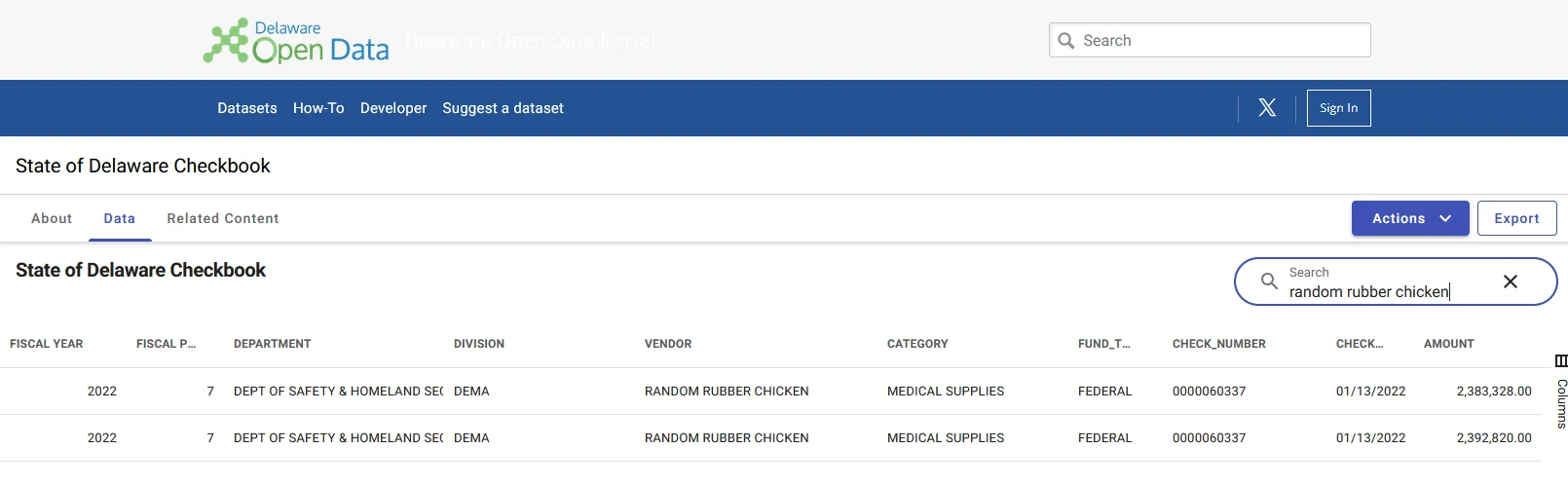
Find your own rubber chicken. Every vendor the state has paid since FY2018 — searchable, no login.
Browse All Vendors →